

Dodge, duck, dip, dive and… dodge. An interesting case from the United States Supreme Court yesterday. Interesting because of what it says, and interesting because of what it very explicitly declined to say.
The question presented in DeVillier v. Texas, 601 U.S. ___ (2024) was whether the Takings Clause of the Fifth Amendment was “self-executing”. That is, whether a landowner could sue a State for money directly under the Takings Clause, even if there is no statute specifically creating a cause of action (and where the closest statute very expressly does not provide a remedy ...

With its expansion into Texas, Nossaman is enjoying more opportunities to assist public entities with large and significant public works projects. These projects will help to shape the infrastructure being developed and integrated throughout the United States. The recent addition of two partners with vast experience in eminent domain law, particularly as applied in the Lone Star State, will fortify Nossaman’s efforts to assist clients with their projects so that they progress seamlessly from start to finish.
Nossaman’s involvement with eminent domain matters on behalf of ...

On April 12, 2024, in Sheetz v. County of El Dorado, the U.S. Supreme Court unanimously overruled more than two decades of California precedent, holding that legislatively established development impact fee programs must have an essential nexus and a rough proportionality to the impacts from the proposed development project on which they are being applied. The full ramifications of this ruling are still yet to be decided, however, as the Supreme Court left open the possibility of applying the nexus/proportionality tests in a more deferential manner when the development impact ...

Most private development projects in California trigger some sort of discretionary public approval, whether it be environmental review, zone changes, permits, or other forms of entitlement approvals. As part of that approval process, public agencies are more frequently demanding certain off-site public improvements to accommodate the proposed private development. Such improvements could include, for example, street widenings to accommodate additional traffic, pump stations for additional water capacity, or flood improvements to address drainage or run-off concerns. ...

Procedures governing eminent domain actions differ in some respects from other areas of law. Notably, all issues, except the sole issue of compensation, are adjudicated by the court. This requires the court to decide issues of law before the jury can determine compensation, complicating timing issues even where civil code sections on the matter seem straightforward.
Pursuant to California Code of Civil Procedure § 583.310, “An action shall be brought to trial within five years after the action is commenced against the defendant.” Absent a written stipulation, oral agreement ...

It is spring. Flowers are blooming; the rivers swell with snowmelt from the mountains; newly thawed Northern ponds welcome the return of their ducks and geese; Florida convulses with an annual migration of revelers. It is only natural for the mind to turn to one of the two inevitabilities: Taxes.
Tax time
As the Ides of April approach for individual tax filers, a mad dash to find tax savings is underway. Many real estate investors and professionals are quite familiar with the tax saving potential of a 1031 Exchange. Named after a section number of the tax code at 26 U.S.C. § 1031—which ...

The Arizona Court of Appeals recently held that members of a homeowners’ association are not entitled to severance damages to their residential parcels when common areas are condemned.
Property owners in Arizona eminent domain actions are entitled to just compensation. Just compensation includes (1) “the value of the property sought to be condemned” and (2) “[i]f the property sought to be condemned constitutes only a part of a larger parcel, the damages that will accrue to the portion not sought to be condemned by reason of its severance from the portion sought to be ...
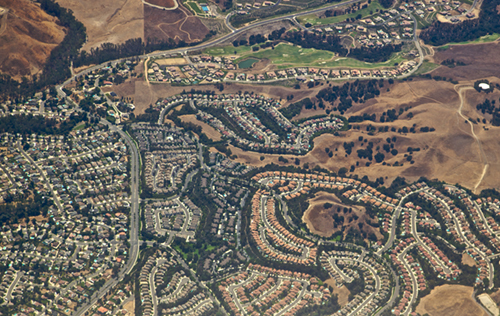
A public agency’s acquisition of private property can sometimes trigger significant severance damages due to eliminating access, cutting off utility service, or taking a substantial portion of a property’s parking. As agencies look to get more creative in minimizing exposure to large damages claims, they will sometimes offer up mitigation alternatives, such as providing an alternative access, or new utility service, or replacement parking, with such rights being granted from an adjacent or neighboring property. These mitigation solutions are often a win-win for ...

When one hears “eminent domain” or “condemnation,” you might envision a governmental agency or utility coming in and acquiring the entirety of a piece of property and leaving nothing behind. However, often times, condemnation does not require the entire property, but only a portion or rights to use a portion a specific way. So, what is the difference between the various terms of fee simple, an easement, full take, and part take? …

Join us in Riverside, CA on February 7th as we provide an overview of the eminent domain process, along with best practices for right-of-way acquisition, during the International Right of Way Association (IRWA) Chapter 57 Membership Luncheon. We’ll cover everything from identifying project alternatives to ultimately acquiring specific property.
We will provide an overview of the entire process and illustrate how all of the individual components work together. In particular, we’ll discuss how to effectively navigate the precondemnation process to position for the ...
California Eminent Domain Report is a one-stop resource for everything new and noteworthy in eminent domain. We cover all aspects of eminent domain, including condemnation, inverse condemnation and regulatory takings. We also keep track of current cases, project announcements, budget issues, legislative reform efforts and report on all major eminent domain conferences and seminars in the Western United States.
Stay Connected
 RSS Feed
Categories
- Administration
- Appraisal
- CLIMATE CHANGE
- CONGRESS
- Construction
- Court Decisions
- EPA
- Events
- Goodwill
- GOVERNMENT ADMINISTRATION
- Inverse Condemnation & Regulatory Takings
- Lawsuit
- New Legislation
- Possession
- Projects
- Public Agency Law
- Publications
- Redevelopment
- Regulatory Reform and Proposed Rules
- Right to Take
- Right-of-Way
- Seminars
- Valuation
- Videos
- Water